Effective date: [DATE]
1. Who we are. Opportunity Habit is provided by [COMPANY NAME], registered in [JURISDICTION] ("we", "us"). These terms are an agreement between you and us. By creating an account or using the app, you accept them.
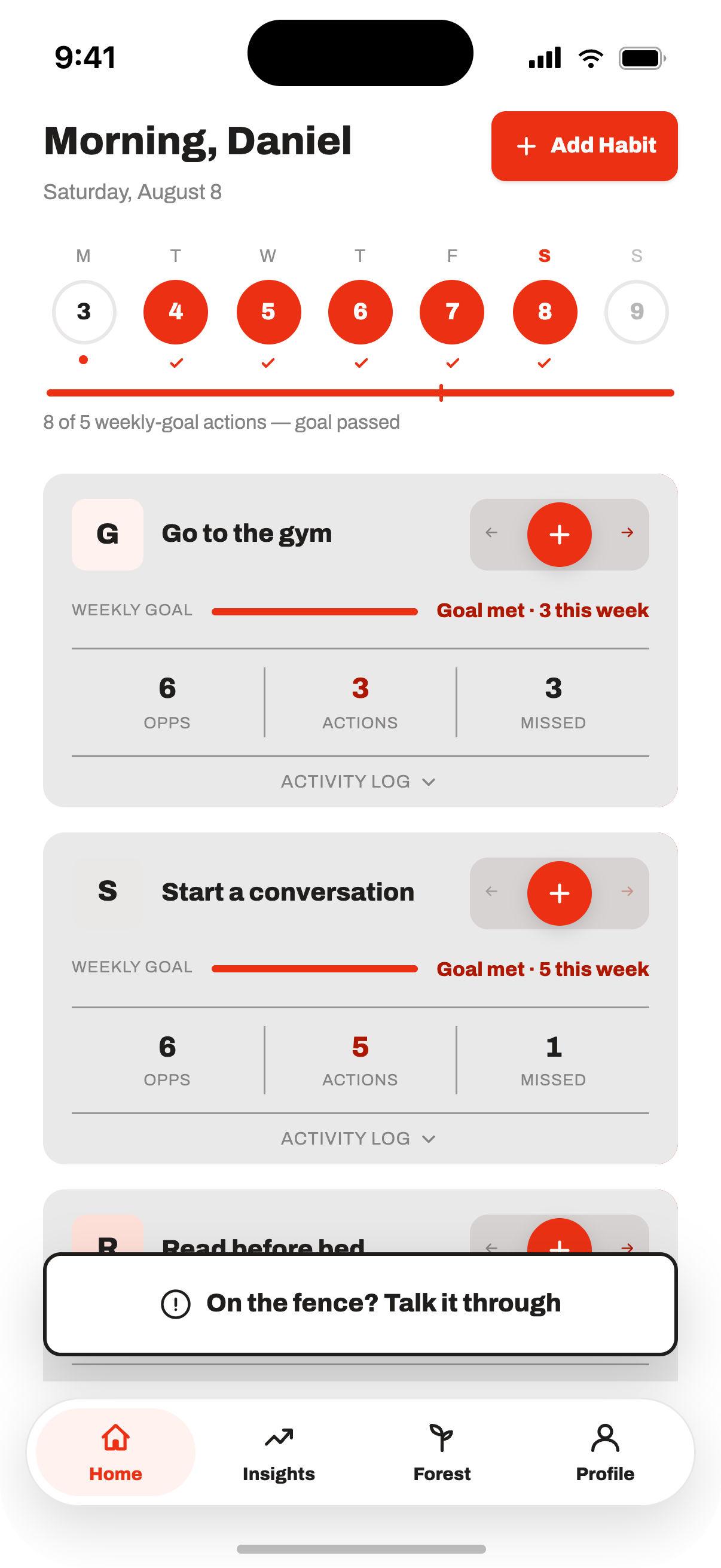
2. What the app is. Opportunity Habit is a habit tracker built around noticing chances and acting on them. It is a self-improvement tool, not medical, psychological, or professional advice. Decisions you make based on what the app shows you are your own.
3. Using the app without an account. You can use Opportunity Habit as a guest. Your habits and history then live only on your device — we hold no copy, and if you lose the device or delete the app, that data is gone. Creating an account is what enables backup and sync.
4. Your account. You need a valid email address (or a Google account) to sign up. Keep your credentials secure; you are responsible for activity under your account. You must be at least 16 years old, or the minimum age of digital consent in your country, whichever is higher.
5. Your content. Habit names, notes, and everything you log belong to you. For signed-in accounts, you grant us the limited right to store and process that content solely to operate the service — syncing it between your devices, backing it up, and generating your own statistics. We do not use your content for advertising and we do not sell it.
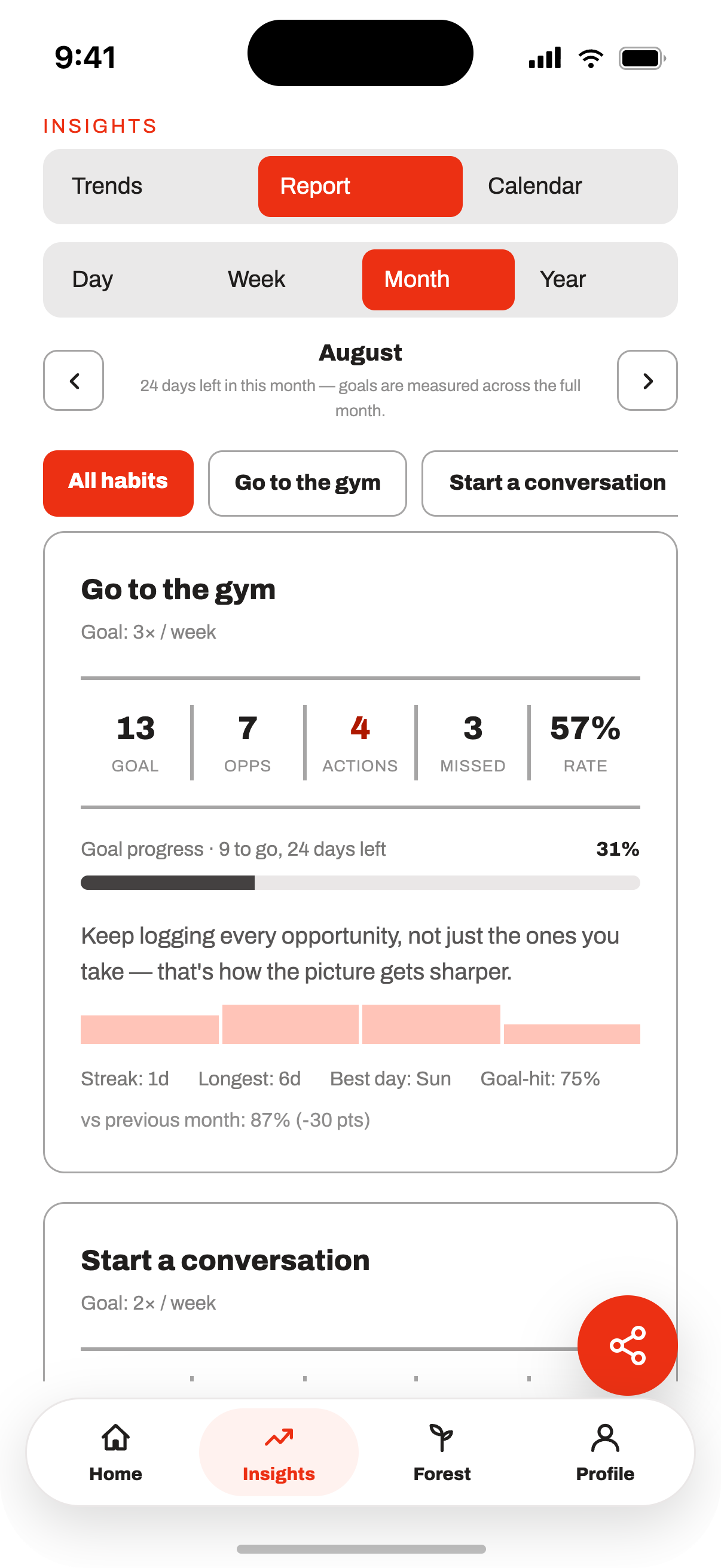
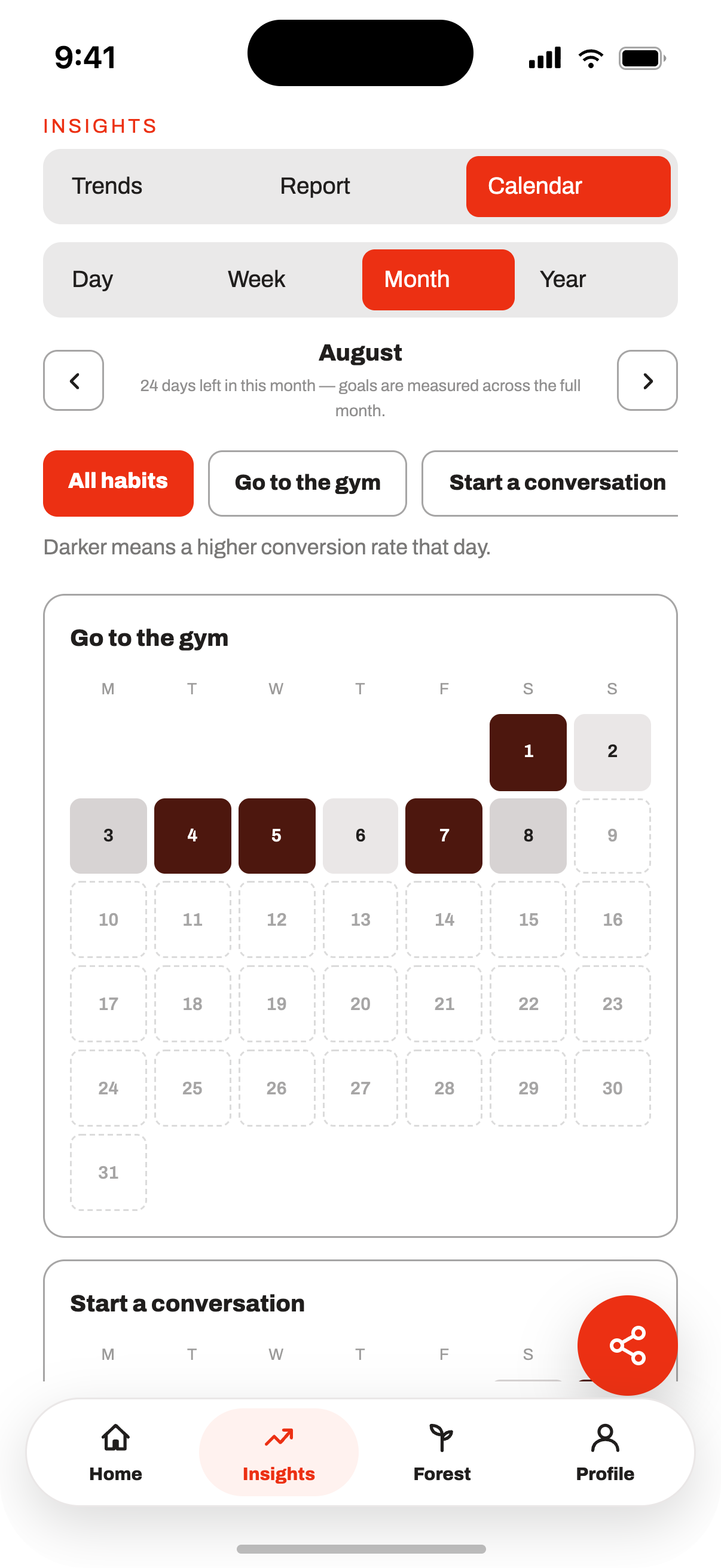
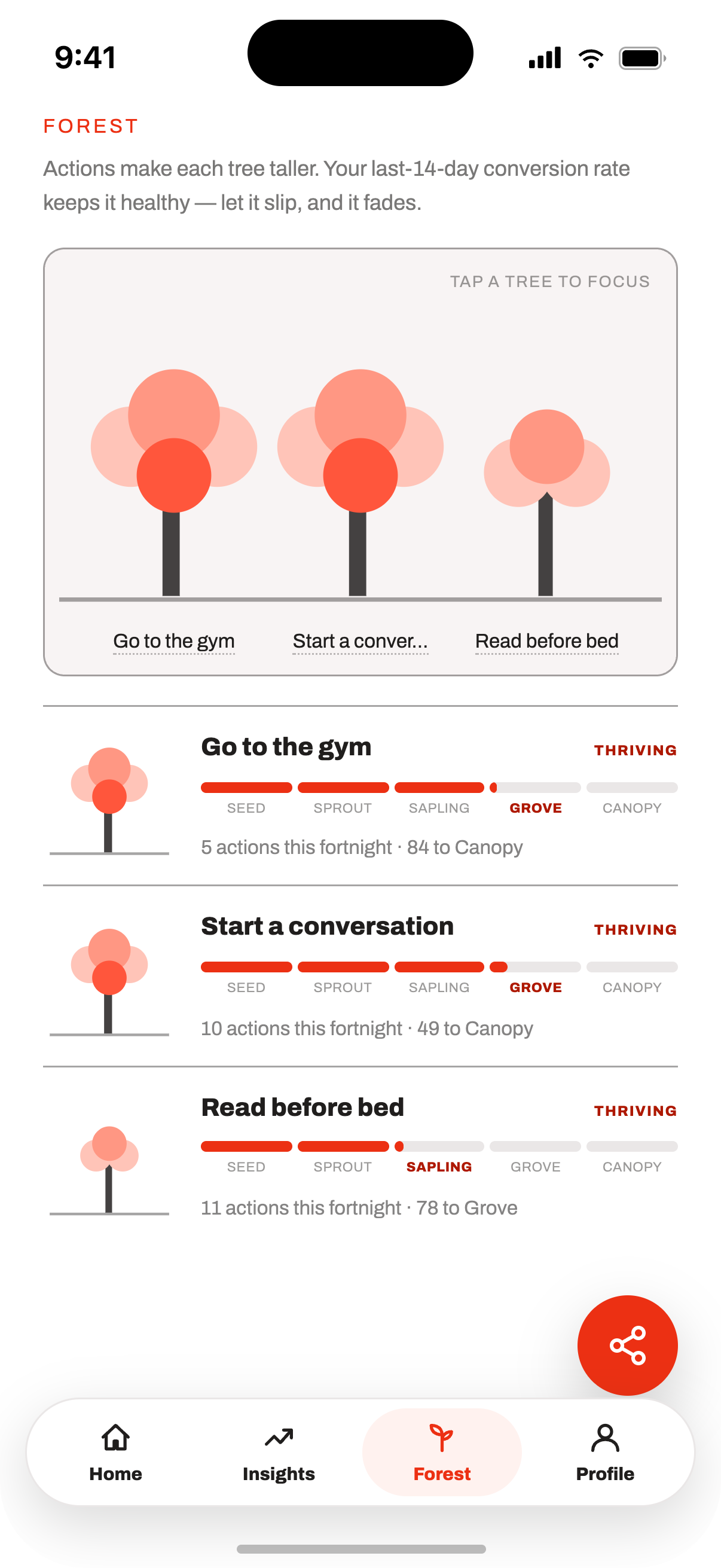
6. Subscriptions. Some features (trend analysis, reports, the calendar heatmap, and the forest view) require a paid subscription. Subscriptions are purchased through, billed by, and managed in the Apple App Store or Google Play — including free trials, renewals, price display, and cancellation. Deleting your account does not cancel your subscription; only the store can do that, and the app tells you so before deletion. Refunds are handled by the store under its rules. Logging your habits and viewing your history never requires payment, and a lapsed subscription never takes away data you logged.
7. Acceptable use. Don't attempt to break, overload, reverse-engineer, or gain unauthorized access to the service or other people's data; don't use the service for anything unlawful.
8. Ending things. You can delete your account in the app (or via our website's deletion page). Your data is held for 14 days in case you change your mind — signing back in during that window restores everything — then erased from our servers, and from backups within 30 days. We may suspend or terminate accounts that violate these terms; where reasonable, we'll warn you first.
9. Service changes and availability. We may change, add, or remove features. The app is designed to work offline; sync and account features depend on our servers and third-party services and may occasionally be unavailable. We provide the service "as is" and, to the extent the law allows, disclaim warranties and limit our liability to the amount you paid us in the twelve months before a claim. Nothing in these terms limits liability that cannot be limited by law.
10. Changes to these terms. If we make material changes we'll notify you in the app or by email before they take effect. Continuing to use the service after that means you accept the new terms.
11. Governing law and contact. These terms are governed by the laws of [JURISDICTION]. Questions: [CONTACT EMAIL].
Effective date: [DATE]
1. The short version. Your habit data lives on your device. If you create an account, it also syncs to our servers so you can back it up and use more than one device. We don't sell your data, we don't show ads, analytics is off unless you turn it on, and the private notes you write are never sent to analytics under any setting.
2. What we collect and why.
If you use the app as a guest: everything — your habits, notes, logged opportunities and actions, goals, settings — stays in a local database on your device. We receive nothing.
If you create an account, we store:
- Account details: your email address, name (if you give one), and sign-in identity (email/password via Firebase Authentication, or your Google account). Passwords are handled by Firebase Authentication; we never see them.
- Your habit data: habit names, your optional "when will opportunities come up" notes, goals and their history, and each logged entry with its timestamp and the time zone it was recorded in. This is the product — it exists so your own statistics can be computed and synced.
- Settings: notification preferences, focus areas you picked, and (if you drew one) your onboarding commitment signature.
- Subscription status: whether you have an active subscription, its plan and renewal date — mirrored from the payment provider so the app works offline. We never receive your card or payment details; Apple, Google, and our payment processor RevenueCat handle those.
3. Analytics — opt-in only. Usage analytics (via PostHog) is disabled by default and only ever enabled if you explicitly agree, in onboarding or in your profile. When enabled, events carry only counts, categories, and durations — for example "an entry was logged from the slider". They never include habit names, your notes, or your email. Turning analytics off stops collection immediately and discards anything queued.
4. Notifications are scheduled locally on your device. We don't operate a push-notification service and hold no notification tokens.
5. Where your data lives. Synced data is stored in Google Firebase (Cloud Firestore) in the London region (europe-west2). Access is restricted by security rules so that only your authenticated account can read or write your data.
6. Who processes data for us. Google Firebase (authentication, database, hosting, functions), RevenueCat (subscription status), PostHog (analytics, only if you opt in), and our email delivery provider [EMAIL PROVIDER] (verification emails and export links). Each receives only what its job requires. We do not sell personal data or share it for advertising.
7. Your data, your controls.
- Export: request a full copy in the app — machine-readable JSON and spreadsheet-ready CSV. Signed-in users receive a download link, valid for 24 hours, sent only to a verified email address. Guests save the file directly from the device.
- Deletion of entries and habits: deleting in the app hides the data immediately everywhere and erases it from our servers within 30 days.
- Account deletion: available in the app or at [WEBSITE]/delete. Your data is held for 14 days so you can change your mind (sign back in to restore), then erased from our servers, and from backups within 30 days. Records we are legally required to keep — [e.g. transaction records for tax purposes] — are the only exception, kept no longer than the law requires.
8. The website is a static site. When you use the account-deletion page, you sign in through Firebase Authentication; standard server logs (IP address, request time) are kept briefly by our hosting provider for security.
9. Children. The service is not directed at children and we don't knowingly collect data from anyone under 16 (or the applicable age of digital consent).
10. Your rights. Depending on where you live (including under UK/EU GDPR), you have the right to access, correct, export, delete, and object to processing of your personal data. The in-app tools above cover most of this; for anything else, contact [CONTACT EMAIL]. You can also complain to your data-protection authority.
11. Changes. If we materially change this policy we'll tell you in the app or by email before it takes effect.
Contact: [COMPANY NAME], [ADDRESS], [CONTACT EMAIL].